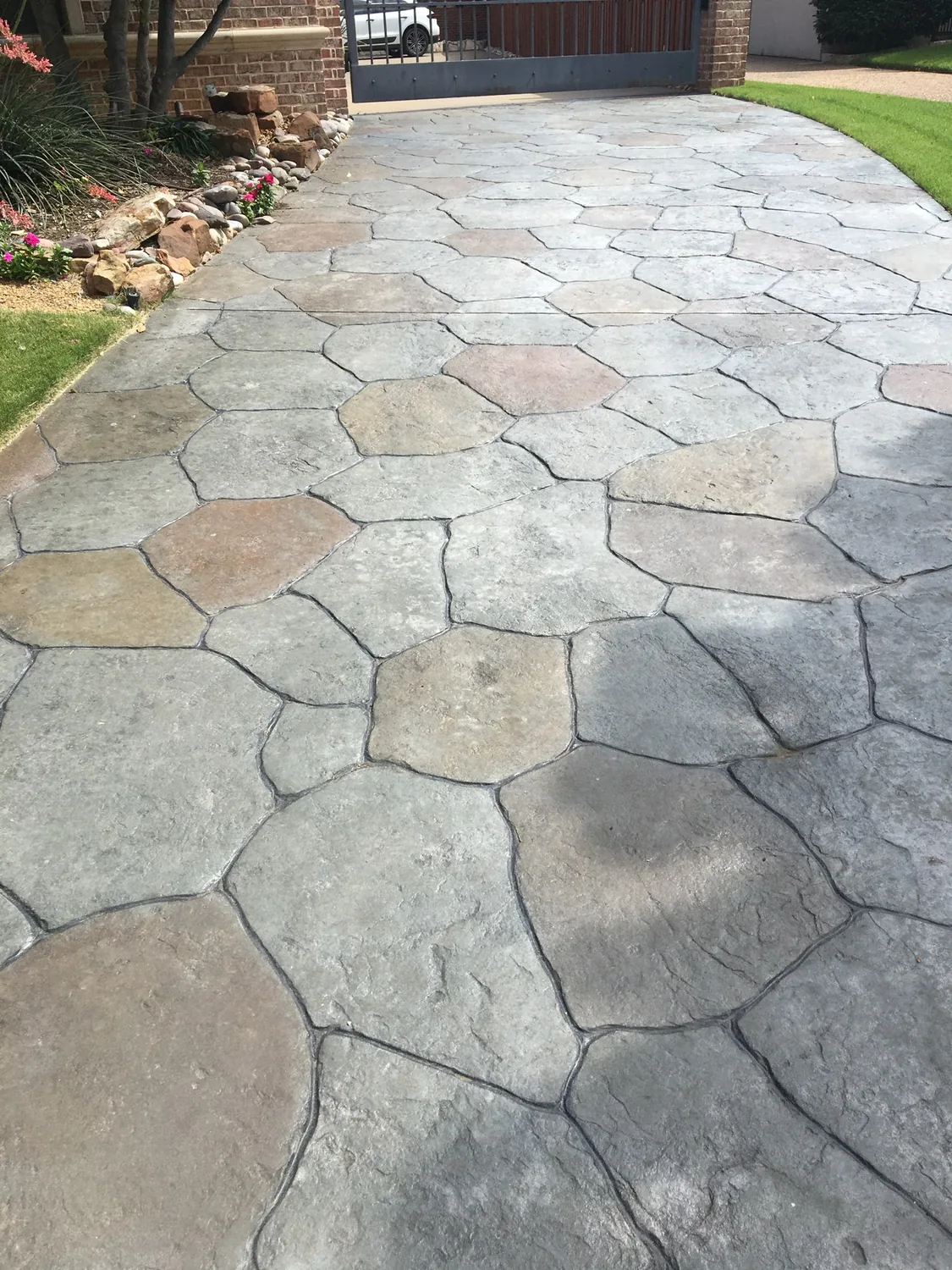
What is stamped concrete, exactly?
It is a fresh slab stamped with patterned mats while the concrete is still soft, then tinted to pass for stone, brick, or slate. You get the look of a paver field, but it pours as one solid piece, with no joints to weed and nothing to drift apart along a seawall.
How much does stamped concrete cost in Cape Coral?
Decorative work prices above plain flatwork, and the base under it still has to be rolled over loose sand, reinforced with fiber and mesh, and graded to drain. As a starting range, stamped concrete tends to run about $14 to $22 per square foot, swinging with pattern detail, the number of colors, and the sealing. We hand you a real quote once we've walked the space.
How well does stamped concrete hold up in Cape Coral?
The base is built like any slab in this canal city, rolled over sand and reinforced with fiber and welded wire mesh, then graded for drainage. It is the decorative surface that needs minding: hard Gulf sun, steady humidity, and salt off the canals work on the color and sealer, so we reseal on a cycle. Pavers, by contrast, heave and split apart as the sand beneath them shifts and washes out, all the more on a lot backing a canal.
What patterns and colors can I choose?
Stone, slate, brick, and plank patterns in coastal and earth tones that read well on the canal homes here. We bring samples to the lot and tune the look to your house and whatever hardscape and dock are already in place.
How often will it need resealing here?
Plan on resealing every couple of years, and sooner on anything taking full Florida sun, salt spray off the canal, or steady storm rain. We hand over a plain maintenance schedule so the color and finish hold their depth.
Is stamped concrete slippery when it's wet?
It can run smoother than a broom finish, so on walkways, pool decks, and anywhere that stays damp in our heavy air we cut a non-slip additive into the sealer. We flag the spots in your layout where that earns its place.
How does it compare with pavers on price?
Stamped concrete usually goes in for less than pavers, leaves no joints to weed, and won't pull apart the way pavers do once the sand along a canal shifts or washes out, though it does want periodic resealing. We lay the trade-offs out for you straight.